← Back to all courses Ku noqo dhammaan koorsooyinka
English 10
Short stories, Greek tragedy, Frankenstein, Othello, dystopia and a synthesis capstone.
Somali support text on this page is a draft, needs native review. Qoraalka Soomaaliga waa qabyo oo wuxuu sugayaa dib-u-eegis.
About this course
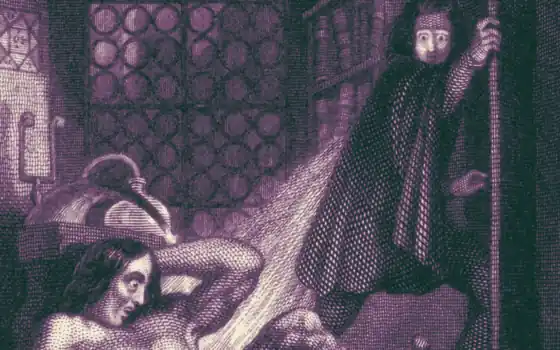
English 10 builds on English 9 with longer, more challenging texts and more independent writing. In this one-credit course you will read short stories such as "A Jury of Her Peers" and "An Occurrence at Owl Creek Bridge," the Greek tragedy Oedipus Rex, sonnets and the poetry of Emily Dickinson, Mary Shelley's Frankenstein, Shakespeare's Othello, Lord of the Flies, and dystopian fiction about power and control. Along the way you will sharpen essay writing: strong thesis statements, well-chosen evidence and conclusions that matter. The course ends with argument and rhetoric and a synthesis essay that combines several sources into your own position. We bring in real questions from Minnesota and East Africa, such as who gets to hold power and how communities treat outsiders. Each unit has video lessons with checkpoints, guided notes, discussion and a writing or speaking task.
Before you start
English 9 or equivalent.
What you will learn
- Students will analyze theme, character and structure in short stories, drama, poetry and novels.
- Students will explain how tragedy and Gothic fiction use fate, guilt and fear to create meaning.
- Students will compare poems and texts that treat similar themes in different ways.
- Students will write explanatory essays with a clear thesis, relevant evidence and a strong conclusion.
- Students will analyze arguments using ethos, pathos, logos and the rhetorical situation.
- Students will write a synthesis essay that uses multiple sources to support an original claim.
- Students will present ideas clearly in recorded explanations and discussions.
Units and lessons
Unit 1: Short stories
- Introduction to Short Stories
- Direct and Indirect Characterization
- First, Second and Third Person
- Situational Irony
- Verbal Irony and Sarcasm
- Symbolism
- Foreshadowing and Flashback
- Making Inferences: The Lady, or the Tiger?
- A Jury of Her Peers: Background and Analysis
- Linear and Nonlinear Plots
- An Occurrence at Owl Creek Bridge: Quick Summary
- Owl Creek Bridge: How Point of View Tricks Readers
Unit 2: Greek tragedy
- Thespis, Athens and the Origins of Greek Drama
- Tragedy Lessons from Aristotle
- What Is a Tragedy?
- Antigone: The Ancient Greek Chorus
- What Really Happened to Oedipus?
- Oedipus Rex: Summary and Analysis
- Oedipus Rex: The Parados
- Dramatic Irony
- Characteristics of a Tragic Hero
- Oedipus Rex: The Exodos
- Fate, Family and Oedipus Rex
- Hamartia and the Tragic Figure
Unit 3: Poetry
- Introduction to Poetry: Types, Devices and Theme
- The Speaker in Poetry
- Figurative Language: Simile, Metaphor, Personification
- Sound Devices: Alliteration, Consonance, Assonance
- Imagery, Connotation and Symbol in "The Raven"
- Metaphor in Shakespeare's Sonnet 73
- Identifying Rhyme Scheme in Shakespearean Sonnets
- Why Shakespeare Loved Iambic Pentameter
- Petrarchan vs Shakespearean Sonnets
- How to Analyze Shakespeare's Sonnets
- The Poetry of Emily Dickinson
- On Dickinson's Dash
Unit 4: Gothic fiction
- What Is Gothic Literature?
- Romanticism and Frankenstein
- Everything You Need to Know to Read Frankenstein
- The Context of Mary Shelley and Frankenstein
- Frankenstein Plot Summary
- Frankenstein: Frame Narrative
- Frankenstein Part 1: Crash Course Literature
- Frankenstein Part 2: Crash Course Literature
- What Is a Foil?
- How to Integrate Quotes: The I.C.E. Method
- Micro Lesson: Embedding Quotations
Unit 5: Informational writing
- How to Write an Essay: The Three Stages
- The Thesis Statement: Center of the Essay
- How to Write a Strong Thesis Statement
- Introduction Paragraphs and the Thesis
- Writing an Eye-Catching Introduction
- What Counts as Evidence?
- Writing Strong Body Paragraphs
- How to Write Body Paragraphs
- Transitions Between Sentences and Paragraphs
- Writing a Transition Sentence in Three Steps
- The Conclusion Paragraph: Two Purposes
- How to Write a Strong Conclusion
Unit 6: Shakespeare
- Introduction to Othello
- Othello Plot Summary
- Reading Act 1 with PAWS
- Soliloquy, Monologue and Aside
- Iago's Soliloquy in Act 1, Scene 3
- An Actor on Race and Iago
- Iago: Beware the Green-Eyed Monster
- Act 3, Scene 3: The Temptation Scene
- Close Reading: Act 3, Scene 3
- Racism in Othello
- Othello, Act 5 and Tragedy Review
- Performing Shakespearean Verse
Unit 7: The novel
- Why read Lord of the Flies?
- Lord of the Flies: Context
- Lord of the Flies: Plot Summary
- What Is an Allegory?
- Symbols in Lord of the Flies
- Ralph Character Analysis
- Piggy Character Guide
- Lord of the Flies: Crash Course Literature
- Lord of the Flies: Themes
- The Real-Life Lord of the Flies
- Golding on the Novel's Optimism
Unit 8: Power and dystopia
- How to Recognize a Dystopia
- What "Orwellian" Really Means
- Why Read Fahrenheit 451?
- Fahrenheit 451, Part 1: The Hearth and the Salamander
- Fahrenheit 451, Part 2: The Sieve and the Sand
- Fahrenheit 451, Part 3: Burning Bright
- 1984, Part 1: Orwell and the Power of Language
- 1984, Part 2: Truth, Memory and Surveillance
- 1984 Plot Summary
- Propaganda in World War II
- Bias, Propaganda and the News
Unit 9: The art of argument
- Introduction to the Art of Argument
- The Rhetorical Situation: WE CAMP
- The Rhetorical Situation and Occasion
- The Speaker
- The Audience
- Purpose
- Aristotle's Rhetoric and the Three Appeals
- Ethos, Pathos and Logos in the Declaration of Sentiments
- Connecting With Your Audience Through the Appeals
- How Ethos, Pathos and Logos Shape Advertising
- What Is a Counterargument?
- TED's Secret to Great Public Speaking
Unit 10: Capstone: synthesis essay
- Mix It All Together: What Synthesis Is
- Synthesis Essay: Read the Prompt
- Synthesis Essay: Read and Mark the Sources
- Reading Actively: How to Annotate
- Finding and Judging Research Sources
- Synthesis Essay: Write a Thesis
- Synthesis Essay: Plan the Essay
- How to Combine Your Sources
- Direct Quote or Paraphrase?
- MLA In-Text Citations
- Counterargument and Rebuttal
- How the Synthesis Essay Is Scored
Minnesota standards
This course follows the Minnesota K-12 Academic Standards in English Language Arts for grades 9-10, covering Reading Literature, Reading Informational Text, Writing, Speaking, Viewing, Listening and Media Literacy, and Language. Each unit names the strands it practices.
Unit 1: Short stories
- 10.1.4.1 Cite strong and thorough textual evidence to support conclusions of what a text says explicitly as well as inferences dr[awn from the] text including analysis of how and when author introduces concepts, ideas, or characters; objectively summarize the text.
- 10.1.4.3 Analyze how events, ideas and complex characters develop over the course of a text and advance the plot, in a literary text.
- 10.1.5.1 Evaluate the impact of the author's choices concerning order of events within a text (e.g., parallel, linear, and nonlinear plots).
- 10.1.4.2 Analyze and compare/contrast the themes or central ideas of multiple texts, researching and interpreting possible impact of author perspective, identity, and bias.
- 10.2.5.2 Write to respond to literary text, choosing either a deeper or wider analysis of narrative elements.
Unit 2: Greek tragedy
- 10.1.4.3 Analyze how events, ideas and complex characters develop over the course of a text and advance the plot, in a literary text.
- 10.1.4.2 Analyze and compare/contrast the themes or central ideas of multiple texts, researching and interpreting possible impact of author perspective, identity, and bias.
- 10.1.4.1 Cite strong and thorough textual evidence to support conclusions of what a text says explicitly as well as inferences dr[awn from the] text including analysis of how and when author introduces concepts, ideas, or characters; objectively summarize the text.
- 10.2.4.1 Write to argue, basing argument and counterargument, supported with evidence, on an understanding of the relevant and authentic issues connected to the argument, building on skills from previous years.
- 10.1.5.1 Evaluate the impact of the author's choices concerning order of events within a text (e.g., parallel, linear, and nonlinear plots).
Unit 3: Poetry
- 10.1.8.1 Evaluate the impact of vocabulary, including key words or phrases with multiple meanings, on content, style, and meaning of literary text.
- 10.1.4.2 Analyze and compare/contrast the themes or central ideas of multiple texts, researching and interpreting possible impact of author perspective, identity, and bias.
- 10.1.2.3 Locate, select, and read text by multiple authors on the same topic or theme to examine concepts or issues from multiple viewpoints or perspectives.
- 10.2.5.2 Write to respond to literary text, choosing either a deeper or wider analysis of narrative elements.
Unit 4: Gothic fiction
- 10.1.5.1 Evaluate the impact of the author's choices concerning order of events within a text (e.g., parallel, linear, and nonlinear plots).
- 10.1.4.3 Analyze how events, ideas and complex characters develop over the course of a text and advance the plot, in a literary text.
- 10.1.4.2 Analyze and compare/contrast the themes or central ideas of multiple texts, researching and interpreting possible impact of author perspective, identity, and bias.
- 10.2.5.2 Write to respond to literary text, choosing either a deeper or wider analysis of narrative elements.
- 10.2.8.1 Use and cite a wide variety of print and digital sources, quoting, paraphrasing, and summarizing, avoiding plagiarism and following the guidelines in a style manual appropriate for the discipline and purpose, with guidance.
Unit 5: Informational writing
- 10.2.5.1 Write to inform or explain, evaluating accuracy and relevancy of information to convey complex ideas about a topic; use [...] an objective tone while attending to the norms and conventions of the discipline, building on skills from previous years.
- 10.2.3.1 Write and revise to align with the guidelines (e.g., character counts, word counts, structure, style) of various publications.
- 10.2.3.2 Make effective word use and sentence structure choices for meaning or style, considering audience and context.
- 10.2.1.3 Write with command of grammar and mechanics to influence voice and style.
- 10.2.8.1 Use and cite a wide variety of print and digital sources, quoting, paraphrasing, and summarizing, avoiding plagiarism and following the guidelines in a style manual appropriate for the discipline and purpose, with guidance.
Unit 6: Shakespeare
- 10.1.4.3 Analyze how events, ideas and complex characters develop over the course of a text and advance the plot, in a literary text.
- 10.1.8.1 Evaluate the impact of vocabulary, including key words or phrases with multiple meanings, on content, style, and meaning of literary text.
- 10.1.6.1 Analyze how the author's, including Dakota and Anishinaabe authors, purpose, stated identities, biases, and perspective shape the content and style of a text.
- 10.3.2.1 Make effective choices regarding vocabulary, language, structure, and advanced application of features of spoken languag[e ...] questioning), in a variety of forms including digital and face-to-face interactions, considering audience and context.
Unit 7: The novel
- 10.1.4.2 Analyze and compare/contrast the themes or central ideas of multiple texts, researching and interpreting possible impact of author perspective, identity, and bias.
- 10.1.4.3 Analyze how events, ideas and complex characters develop over the course of a text and advance the plot, in a literary text.
- 10.1.4.1 Cite strong and thorough textual evidence to support conclusions of what a text says explicitly as well as inferences dr[awn from the] text including analysis of how and when author introduces concepts, ideas, or characters; objectively summarize the text.
- 10.2.5.2 Write to respond to literary text, choosing either a deeper or wider analysis of narrative elements.
Unit 8: Power and dystopia
- 10.1.4.2 Analyze and compare/contrast the themes or central ideas of multiple texts, researching and interpreting possible impact of author perspective, identity, and bias.
- 10.1.2.3 Locate, select, and read text by multiple authors on the same topic or theme to examine concepts or issues from multiple viewpoints or perspectives.
- 10.1.8.2 Analyze the impact of specific word choices, including word origins that allude to culture, time period, or geography, in informational text.
- 10.1.6.2 Analyze the impact of a text's publishing date on its current validity and credibility, in literature, social studies, or science.
Unit 9: The art of argument
- 10.1.6.3 Delineate and evaluate the argument and specific claims in a text, assessing whether the reasoning is valid and the evidence is relevant and sufficient; identify false statements and fallacious reasoning.
- 10.1.7.1 Analyze the arguments of several authors with similar or different perspectives on the same topic to evaluate arguments using relevance and sufficiency of evidence and validity of reasoning.
- 10.2.4.2 Write to persuade, demonstrating and understanding of the relevant and authentic issues connected to the position, building on skills from previous years.
- 10.3.2.1 Make effective choices regarding vocabulary, language, structure, and advanced application of features of spoken languag[e ...] questioning), in a variety of forms including digital and face-to-face interactions, considering audience and context.
- 10.2.4.1 Write to argue, basing argument and counterargument, supported with evidence, on an understanding of the relevant and authentic issues connected to the argument, building on skills from previous years.
- 10.1.6.1 Analyze how the author's, including Dakota and Anishinaabe authors, purpose, stated identities, biases, and perspective shape the content and style of a text.
Unit 10: Capstone: synthesis essay
- 10.1.9.1 Access information from a wide variety of sources, on both sides of an issue, or from multiple perspectives, to expand understanding of a topic of inquiry.
- 10.1.9.2 Make critical choices about information sources to use, based on perspective, biases credibility, and relevancy.
- 10.2.7.2 Plan and conduct independent research, synthesizing information from a wide variety of sources, demonstrating understanding of subject of investigation, and share findings in writing.
- 10.2.8.1 Use and cite a wide variety of print and digital sources, quoting, paraphrasing, and summarizing, avoiding plagiarism and following the guidelines in a style manual appropriate for the discipline and purpose, with guidance.
- 10.2.4.1 Write to argue, basing argument and counterargument, supported with evidence, on an understanding of the relevant and authentic issues connected to the argument, building on skills from previous years.
- 10.1.7.1 Analyze the arguments of several authors with similar or different perspectives on the same topic to evaluate arguments using relevance and sufficiency of evidence and validity of reasoning.