← Back to all courses Ku noqo dhammaan koorsooyinka
Civics and Government
Foundations, rights, the three branches, elections and civic action, and Minnesota, local and tribal governments.
Somali support text on this page is a draft, needs native review. Qoraalka Soomaaliga waa qabyo oo wuxuu sugayaa dib-u-eegis.
About this course
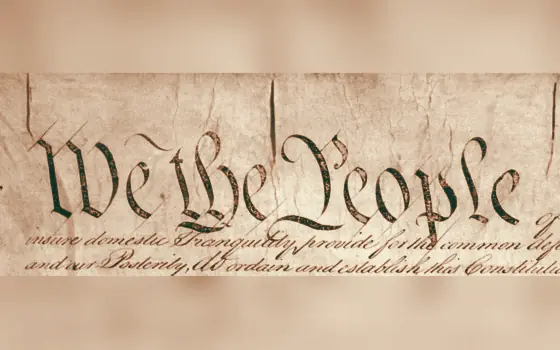
Civics and Government explains how power is organized and shared in the United States and how you can take part. In this half-credit, grade 12 course you will study the ideas behind the Constitution, your rights and duties, the three branches of the federal government, elections and public policy, and the governments closest to home: the State of Minnesota, cities, counties and school boards, and the 11 sovereign Tribal Nations of the Dakota and Ojibwe people. Along the way we compare the U.S. system with governments in East Africa, such as the federal systems of Somalia and Ethiopia and Kenya's 2010 constitution. The course is strictly nonpartisan. You will learn how to find reliable information, weigh different points of view and reach your own conclusions, not what to think. Each unit has short video lessons with checkpoints, guided notes, a discussion and a civic project. This course meets the Minnesota grade 11-12 government and citizenship requirement.
Before you start
None. Open to grades 9-12.
What you will learn
- Students will explain the founding ideas of natural rights, social contract, popular sovereignty and representative democracy using founding documents.
- Students will compare rights in the U.S. Constitution, the Minnesota Constitution and the Universal Declaration of Human Rights.
- Students will explain the structure and powers of Congress and how a bill becomes a law.
- Students will explain who can vote in Minnesota, how to register and vote, and how laws have affected access to voting.
- Students will explain the structure and powers of Minnesota's government and its relationship with the federal and Tribal governments.
Units and lessons
Unit 1: Foundations of American government
- Introduction to Government and Politics
- Forms of Government: Democracy and Authoritarianism
- The Social Contract
- Democratic Ideals in the Declaration of Independence
- Constitutional Compromises
- Separation of Powers and Checks and Balances
- Federalism
- Legal System Basics
- Balancing Majority and Minority Rights
- Federalism in Ethiopia
- Federalism in Somalia
- The Structure of Kenya's Government
Unit 2: Rights and responsibilities
- The Bill of Rights: an introduction
- Civil rights and civil liberties
- What are the universal human rights?
- Freedom of religion
- Freedom of speech
- Individual freedom versus public safety
- Search and seizure
- The right to a fair trial
- Due process of law
- Equal protection
- The naturalization process
- Rights and responsibilities
Unit 3: The three branches of the federal government
- The Bicameral Congress
- How a Bill Becomes a Law
- Presidential Power
- How Do Executive Orders Work?
- Bureaucracy Basics
- Structure of the Court System
- Marbury v. Madison Explained
- How the Supreme Court Works
- The Federal Budget: Where the Money Comes From and Where It Goes
Unit 4: Elections, parties and civic action
- How Minnesota Elections Work
- Voting Rights Over Time
- Election Basics: Who Sets the Rules?
- Why the Electoral College Exists
- Which Voting System Is Best?
- What Political Parties Do
- What Interest Groups Do
- The Media and Politics
- Sort Fact from Fiction with Lateral Reading
- The Five Stages of the Public Policy Process
- Public Opinion, Wealth and Policy
Unit 5: Minnesota, local and Tribal governments
- A governor and the legislature: signing, vetoing and doing nothing (Washington State)
- How Minnesota's two-year budget is set
- Local government: counties and municipalities
- What do Tribal governments do?
- Tribal sovereignty explained
- Why treaties matter
- How modern Tribal governments work
- Sovereignty Day at the Minnesota Capitol
- U.S.-Dakota treaties in Minnesota
Unit 6: Minnesota Civics Test
No video lessons in this unit.
Unit 7: Civics Test Practice
No video lessons in this unit.
Minnesota standards
Aligned to the Minnesota K-12 Academic Standards (benchmark codes are shown on each unit).
Unit 1: Foundations of American government
- 9.1.2.1 Analyze the foundational ideas of the United States government embedded in founding era documents: natural rights philosophy, social contract, civic virtue, popular sovereignty, constitutionalism, representative democracy, political factions, federalism and individual rights.
- 9.1.2.2 Explain the significance of democratic values and principles to well-functioning democratic processes and elections.
- 9.1.2.3 Analyze current tensions between the government's dual role of protecting individual rights and promoting the general welfare, the struggle between majority rule and minority rights, and the tension between liberty and equality at all levels.
- 9.1.4.1 Evaluate federalism and the provisions of the U.S. Constitution, which delegate to the federal government the powers necessary to fulfill the purposes for which it was established. Distinguish between those powers and the powers retained by the people and the states.
- 9.1.4.6 Describe the purposes, types and sources of laws and rules. Evaluate their impact.
Unit 2: Rights and responsibilities
- 9.1.2.3 Analyze current tensions between the government's dual role of protecting individual rights and promoting the general welfare, the struggle between majority rule and minority rights, and the tension between liberty and equality at all levels.
- 9.1.3.1 Compare rights in the U.S. Constitution and the Bill of Rights and subsequent amendments, the rights in the Constitution of the State of Minnesota, and the Universal Declaration of Human Rights.
- 9.1.3.2 Explain the scope and limits of rights protected by the First and Second Amendments. Explain changes created by legislative action and court interpretation.
- 9.1.3.3 Explain the scope and limits of rights of the accused pretrial under the Fourth and Fifth Amendments. Explain changes created by legislative action and court interpretation.
- 9.1.3.4 Explain the scope and limits of rights of the accused during trial and punishment under the Sixth and Eighth Amendments. Explain changes created by legislative action and court interpretation.
- 9.1.3.5 Evaluate the current and historical interpretations of the principles of due process and equal protection of the law in the 14th Amendment. Analyze evolving civil rights in legislative action and court interpretation.
- 9.1.3.6 Explain the responsibilities and duties for all individuals in a republic.
- 9.1.3.7 Explain how citizenship processes, requirements and duties are established by law. Evaluate the struggle for citizenship since the founding period.
Unit 3: The three branches of the federal government
- 9.1.4.2 Analyze the purposes, organization, functions and processes of the legislative branch as enumerated in Article 1 of the U.S. Constitution.
- 9.1.4.3 Analyze the purposes, organization, functions and processes of the executive branch as enumerated in Article 2 of the U.S. Constitution.
- 9.1.4.4 Analyze the purposes, organization, functions and processes of the judicial branch as enumerated in Article 3 of the U.S. Constitution.
- 9.1.4.9 Compare and contrast the budgets of the United States and Minnesota governments, describing the major sources of revenue and categories of spending for each.
- 9.1.4.10 Explain how individuals, corporations, cooperatives, labor, civic groups and/or other groups influence United States foreign policy.
- 9.1.4.11 Explain the role of international law in world affairs. Evaluate the impact of the participation of nation states in international organizations.
Unit 4: Elections, parties and civic action
- 9.1.1.1 Demonstrate civic skills that enable people to be informed on current issues in order to monitor and influence state, local tribal, national or international affairs.
- 9.1.1.2 Demonstrate the skills necessary to participate in the election process and evaluate how access to voting is impacted by law and application of law.
- 9.1.1.3 Curate and evaluate various sources of information and forms of political persuasion, including digital, for validity, accuracy, ideology, emotional appeals, bias and prejudice.
- 9.1.1.4 Analyze how means of civic engagement are used to influence the American political system at all levels.
- 9.1.2.2 Explain the significance of democratic values and principles to well-functioning democratic processes and elections.
- 9.1.4.5 Analyze how the United States political system is shaped by elections and the election process and procedures involved in voting.
- 9.1.5.1 Analyze the impact of political parties on elections and public policy formation.
- 9.1.5.2 Analyze the role of interest groups, various types of media and public opinion on the political process and public policy formation.
- 9.1.5.3 Examine a public policy issue by defining the problem, developing alternative courses of action, evaluating the consequences of each alternative, selecting a course of action, and designing a plan to implement the action and resolve the problem.
Unit 5: Minnesota, local and Tribal governments
- 9.1.4.7 Explain the powers and operations of the State of Minnesota government as defined in its constitution and its relationship with the federal government and Tribal governments.
- 9.1.4.8 Explain the powers and operations of local government in Minnesota.
- 9.1.4.9 Compare and contrast the budgets of the United States and Minnesota governments, describing the major sources of revenue and categories of spending for each.
- 9.1.6.1 Evaluate the unique political status of Tribal Nations in relation to the United States.
- 9.1.6.2 Compare and contrast trust relationships between Tribal Nations and Minnesota's state and local governments, United States government and governments of other nations.
- 9.1.6.3 Compare and contrast governing structures of Tribal Nations within Minnesota and the United States.
- 9.1.6.4 Examine contemporary challenges and successes regarding Tribal Nations and the United States government (local, state, federal).